“You just have to try this kombucha—it’s like summer in a bottle!” That text popped up from my neighbor one sultry afternoon, right when I was thinking about cutting back on my usual soda habit but craving something tangy and fresh. Honestly, I was skeptical; fermenting tea at home sounded complicated, not to mention the whole “scoby” thing felt a little intimidating. But curiosity won out over hesitation, so I grabbed some fresh strawberries and ginger, and started tinkering.
What surprised me most wasn’t just how simple it was—it was the way the flavors unfolded over days, like a tiny fizzy party happening in my kitchen. The bright, slightly spicy kick of ginger paired with the sweet burst of strawberries made every sip feel like a mini celebration. I remember cracking open the first batch, and my kitchen immediately filled with that familiar kombucha tang, but with a fresh twist that felt both comforting and exciting.
Since then, making this strawberry ginger kombucha has become a bit of a ritual, especially after long days when I want to unwind without reaching for something sugary or heavy. It’s funny how a few simple ingredients, a little patience, and a bit of bubbling magic can turn into something that feels both indulgent and nourishing. The best part? Knowing exactly what’s in my drink—no mystery preservatives, just pure refreshment.
This recipe stuck with me because it’s not just about the drink itself, but the quiet moments it invites—the gentle fizz, the sweet-spicy aroma, and that satisfying clink of a glass poured over ice. It’s a small homemade joy that feels like a secret weapon for staying refreshed and grounded. If you’ve ever been curious about making your own kombucha, this strawberry ginger version might just be the perfect place to start.
Why You’ll Love This Recipe
Making your own strawberry ginger kombucha at home isn’t just a fun experiment; it’s a game-changer for anyone who appreciates a naturally tangy, lightly sweet beverage that’s also good for your gut. I’ve tested this recipe multiple times (honestly, sometimes twice a week), and it always delivers that crisp, bubbly delight with a gentle zing.
- Quick & Easy: While kombucha fermentation takes some time, the hands-on prep is under 15 minutes. Perfect for busy days when you want homemade refreshment without fuss.
- Simple Ingredients: No weird additives here—just tea, sugar, fresh strawberries, ginger, and a SCOBY. You probably have everything already or can find it at any grocery store.
- Perfect for Warm Weather: This strawberry ginger kombucha is ideal for hot days, backyard gatherings, or as a refreshing midday pick-me-up.
- Crowd-Pleaser: Whether you’re serving friends or family, this fizzy treat usually gets repeated requests—kids and adults alike love the natural sweetness with a spicy edge.
- Unbelievably Delicious: The balance of tartness, sweetness, and ginger spice is just right—it’s not too sweet, not too sour, but delightfully refreshing.
This isn’t your average kombucha recipe. The secret is in using ripe, fragrant strawberries and freshly grated ginger, which infuse the brew with vibrant flavor. Plus, the step-by-step method I’ll share helps keep your kombucha bubbling just right, avoiding the overly vinegary or flat results that can happen if you’re new to fermenting tea.
Honestly, making this strawberry ginger kombucha feels like a little win every time—it’s the kind of homemade drink that makes you pause and savor, closing your eyes after that first fizzy sip. If you’ve ever enjoyed a refreshing cherry limeade or the zing of a summer Arnold Palmer, you’ll find this kombucha hits a similar vibe, but with the added goodness of fermentation.
What Ingredients You Will Need
This recipe uses simple, wholesome ingredients to deliver bold flavor and satisfying fizz without any complicated additives or preservatives. Each ingredient plays a clear role—from the base tea that ferments into kombucha to the fresh strawberries and ginger that boost flavor naturally.
- Black or Green Tea: 4-5 bags (or 4-5 teaspoons loose leaf). Choose a quality brand like Twinings or Harney & Sons for the best taste. Avoid flavored or herbal teas as they can interfere with fermentation.
- Granulated Sugar: 1 cup (200 g). Regular white sugar works best as it feeds the SCOBY. Don’t substitute with artificial sweeteners here.
- Filtered Water: 1 gallon (3.8 L). Chlorine or heavy minerals can slow fermentation, so filtered or spring water is preferred.
- Strawberries: 1 to 1 ½ cups fresh, hulled, and sliced. Use ripe, fragrant berries for maximum flavor. Frozen can work in a pinch but fresh is best.
- Fresh Ginger: About 2 inches (5 cm), peeled and grated. Fresh ginger adds a spicy warmth that complements the strawberries perfectly.
- Kombucha SCOBY: 1 healthy culture with about 1-2 cups (240-480 ml) starter liquid from previous batch or store-bought raw kombucha.
- Optional: A few fresh mint leaves or lemon slices for extra zing during second fermentation.
When I started, I picked up my SCOBY from a trusted local source, but many online shops also offer good quality cultures. Keep in mind that the strawberries and ginger not only flavor the kombucha but also help create a natural, lively fizz. For a gluten-free version, this recipe is naturally suitable, and you can swap the sugar with organic cane sugar if preferred.
Equipment Needed
- One-Gallon Glass Jar: Wide-mouth works best to easily add ingredients and SCOBY. Avoid metal containers as they can react with kombucha acids.
- Breathable Cloth Cover: Cheesecloth or a tightly woven kitchen towel secured with a rubber band to keep out dust and insects while allowing airflow.
- Measuring Cups and Spoons: For precise ingredient amounts.
- Non-Metal Stirring Spoon: Wooden or plastic to avoid damaging the SCOBY.
- Funnel and Bottles: For transferring kombucha into airtight bottles for the second fermentation and storage. Swing-top bottles help maintain carbonation.
- Fine Mesh Strainer: To remove fruit solids after second fermentation.
I’ve tried plastic containers before, but glass is definitely the way to go—it doesn’t absorb smells or flavors, and it’s easier to clean. Also, a clean kitchen space helps avoid contamination. If you don’t have a breathable cloth, a coffee filter or paper towel secured tightly can work temporarily, though reusable cloths are more eco-friendly.
Preparation Method
- Prepare the Sweet Tea Base (10 minutes + cooling): Bring 1 gallon (3.8 L) of filtered water to a near boil. Remove from heat and steep 4-5 black or green tea bags for 10-15 minutes. Remove tea bags and stir in 1 cup (200 g) granulated sugar until fully dissolved. Let the sweet tea cool to room temperature (about 1-2 hours). This step is crucial; pouring hot tea over the SCOBY can kill it.
- Combine Tea and SCOBY (5 minutes): Pour the cooled sweet tea into a clean 1-gallon glass jar. Add your SCOBY along with 1-2 cups (240-480 ml) starter kombucha liquid. Cover the jar with the breathable cloth and secure with a rubber band. Place in a warm, dark spot away from direct sunlight (ideally 70-75°F or 21-24°C).
- First Fermentation (7-10 days): Allow the kombucha to ferment for about a week, checking periodically. You’ll notice bubbles forming and the SCOBY growing a new layer. Taste every few days; when it reaches a balance between sweet and tangy (usually 7-10 days), it’s ready for flavoring.
- Add Strawberry and Ginger for Second Fermentation (10 minutes): Remove the SCOBY and 1-2 cups (240-480 ml) of kombucha to start your next batch. Add sliced strawberries (1 to 1 ½ cups) and grated ginger (2 inches or 5 cm) to the remaining kombucha. Transfer this mixture into airtight bottles using a funnel.
- Second Fermentation (2-4 days): Seal bottles tightly and leave at room temperature for 2-4 days to build carbonation. Burp bottles daily to release excess gas. Once fizzy and fragrant, refrigerate to stop fermentation.
- Enjoy and Store: Strain out fruit pieces before serving over ice. Keep refrigerated and consume within 1-2 weeks for best flavor.
Pro tip: If your kombucha tastes too vinegary, shorten the first fermentation next time. Also, don’t forget to save some starter liquid and your SCOBY to keep the cycle going. I’ve found that using a glass funnel helps prevent spills and keeps things tidy.
Cooking Tips & Techniques
Fermenting kombucha is as much art as science, and a few tips can save you from common pitfalls. First, patience is key—rushing the fermentation can result in overly sweet or flat kombucha. I’ve learned to trust my taste buds rather than the calendar strictly. If the brew tastes too sour, reduce the fermentation time by a day or two next batch.
Temperature really affects your kombucha’s success. I keep my jar in a cozy corner of the kitchen where the temperature stays fairly steady. Sudden cold or heat spikes can stress the SCOBY, leading to inconsistent fizz or off flavors.
Avoid metal utensils or containers during fermentation, as the acidic kombucha can react and damage your SCOBY. I stick to wooden spoons and glass jars—keeping things simple keeps the culture happy.
When adding flavors for the second fermentation, don’t overload with fruit. I started with too much once and ended up with a sticky mess that was hard to strain. Around 1 cup of berries and a couple of inches of ginger usually hit the sweet spot.
Lastly, burp your bottles daily during second fermentation to prevent pressure buildup that can lead to messy explosions—trust me, I’ve been there!
Variations & Adaptations
This strawberry ginger kombucha recipe is flexible and welcomes tweaks to suit your taste or dietary needs. Here are a few ideas I’ve tried or would recommend:
- Seasonal Fruit Twists: Swap strawberries for raspberries or blueberries in summer, or try adding sliced peaches for a sweeter note.
- Herbal Infusions: Add fresh mint or basil leaves during second fermentation for a refreshing herbal twist.
- Low-Sugar Option: Use less sugar during the first fermentation, but keep in mind this will slow fermentation and may result in a less fizzy kombucha.
- Ginger-Lemon Kombucha: Add lemon slices alongside ginger for a zesty upgrade that’s bright and tangy.
- Non-Carbonated Version: Skip the second fermentation and enjoy your kombucha fresh for a milder, less fizzy drink.
One variation I loved was mixing in a splash of homemade hibiscus tea during second fermentation, which gave the kombucha a lovely pink color and floral aroma. It reminded me of the delicate flavors in a rose lemonade I tried last summer.
Serving & Storage Suggestions
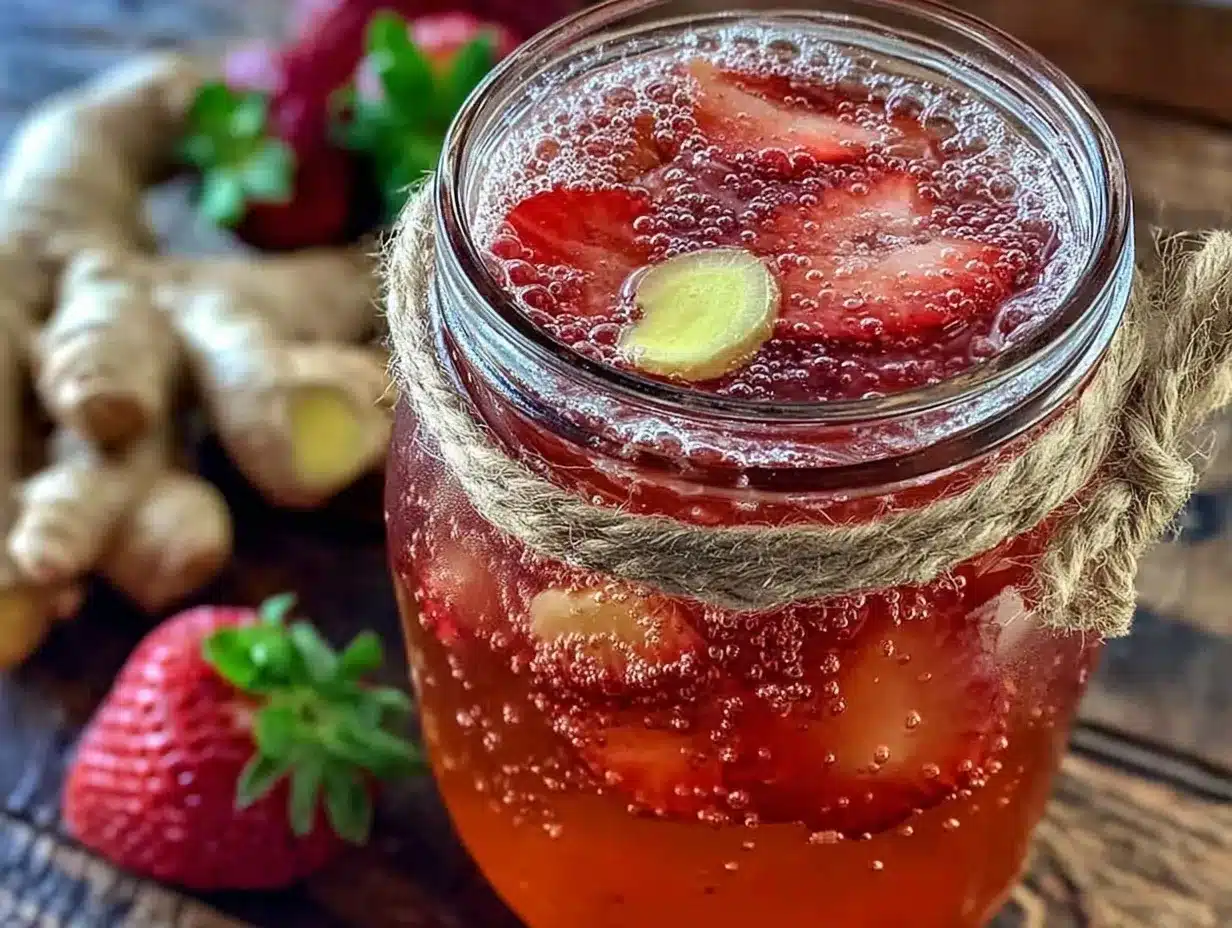
Strawberry ginger kombucha is best served chilled over ice, especially on hot days. Pour it into a tall glass and garnish with a fresh strawberry or a thin slice of ginger for a pretty, inviting touch. It pairs wonderfully with light snacks or dishes like a crisp salad or grilled chicken, making it a lovely companion for casual meals or outdoor gatherings.
Store your kombucha bottles in the refrigerator after second fermentation to keep the fizz locked in and slow the fermentation process. It’s best consumed within 1 to 2 weeks for optimal flavor and carbonation. If you find the kombucha has lost some fizz, gently shake the bottle before opening to revive the bubbles.
Flavors tend to mellow and deepen over time, so if you like a stronger ginger kick, drink it sooner rather than later. Also, don’t forget to strain out fruit pieces before serving to avoid any unexpected chewy surprises.
Nutritional Information & Benefits
This homemade strawberry ginger kombucha is low in calories (about 30-50 calories per 8-ounce serving) and naturally contains probiotics thanks to the fermentation process. These friendly bacteria can support digestion and gut health when enjoyed regularly.
Strawberries contribute vitamin C and antioxidants, while ginger offers anti-inflammatory compounds that add to the healthful benefits of this fizzy drink. Kombucha is naturally gluten-free and can fit easily into most diets, including vegan and dairy-free lifestyles.
While it contains sugar, much of it is consumed by the SCOBY during fermentation, reducing the final sugar content compared to many store-bought sodas or sweet drinks. I appreciate this recipe because it allows me to enjoy a refreshing beverage that feels light and nourishing rather than heavy or overly sweet.
Conclusion
Making homemade strawberry ginger kombucha is a rewarding way to refresh your beverage rotation with something lively, tasty, and good for your gut. It’s a recipe that’s approachable, fun, and flexible enough to fit your taste preferences and schedule.
Whether you’re new to fermenting or just looking for a new twist on a classic, this kombucha offers bright flavors and satisfying fizz that’ll have you looking forward to each batch. Personally, I love how this recipe turns simple ingredients into a sparkling, homemade delight that feels like a small luxury in my daily routine.
Give it a try, experiment with your favorite fruits or herbs, and see how kombucha can brighten your day. If you’ve enjoyed recipes like the frozen strawberry daiquiri or the cucumber mint cooler, this homemade kombucha will be a refreshing new favorite.
FAQs
What is a SCOBY and why do I need it for kombucha?
A SCOBY (Symbiotic Culture Of Bacteria and Yeast) is a living culture that ferments sweet tea into kombucha. It’s essential because it converts sugar into beneficial acids, probiotics, and carbonation.
Can I use frozen strawberries for this kombucha recipe?
Yes, frozen strawberries can work, but fresh berries provide a brighter, fresher flavor and better texture during second fermentation.
How long does the fermentation process take?
The first fermentation usually takes 7-10 days at room temperature. The second fermentation with fruit flavors takes another 2-4 days to develop fizz and flavor.
What if my kombucha tastes too sour or vinegary?
This happens when fermentation goes too long. Next time, shorten the first fermentation by a day or two and taste regularly to catch it at your preferred tanginess.
Is homemade kombucha safe to drink?
When prepared with clean equipment, quality ingredients, and proper fermentation times, homemade kombucha is safe. Always inspect your SCOBY and brew for any mold or off smells before drinking.
Pin This Recipe!
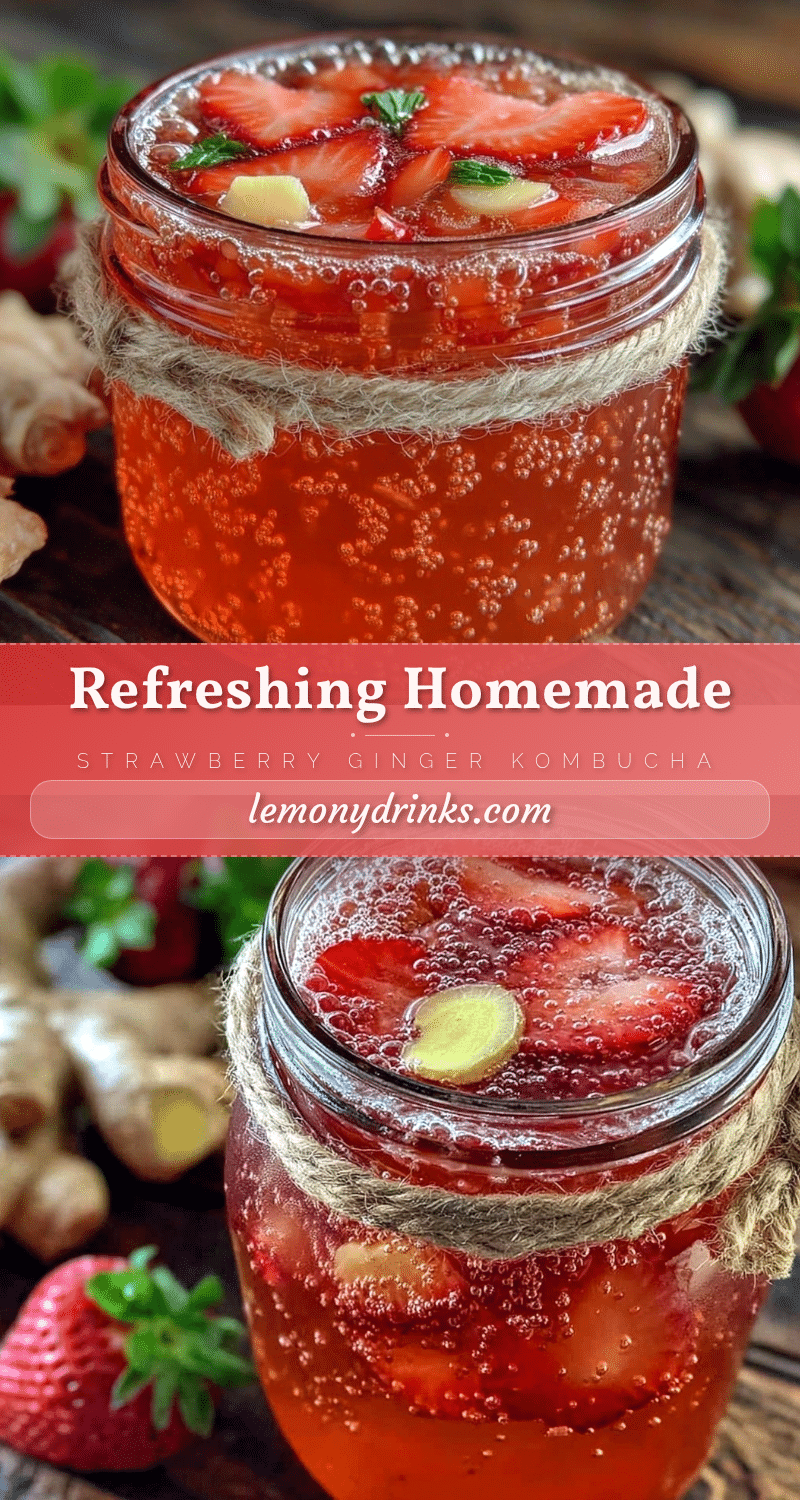
Refreshing Homemade Strawberry Ginger Kombucha

A naturally tangy, lightly sweet homemade kombucha infused with fresh strawberries and ginger, perfect for a refreshing and gut-friendly beverage.
- Prep Time: 15 minutes
- Cook Time: 7-10 days (first fermentation) + 2-4 days (second fermentation)
- Total Time: 9-14 days
- Yield: About 1 gallon (16 servings of 8 oz each) 1x
- Category: Beverage
- Cuisine: Fermented Drink
Ingredients
- 4–5 black or green tea bags (or 4–5 teaspoons loose leaf)
- 1 cup (200 g) granulated sugar
- 1 gallon (3.8 L) filtered water
- 1 to 1 ½ cups fresh strawberries, hulled and sliced
- About 2 inches (5 cm) fresh ginger, peeled and grated
- 1 healthy kombucha SCOBY with 1-2 cups (240–480 ml) starter liquid
- Optional: fresh mint leaves or lemon slices for second fermentation
Instructions
- Prepare the sweet tea base: Bring 1 gallon of filtered water to near boil. Remove from heat and steep 4-5 tea bags for 10-15 minutes. Remove tea bags and stir in 1 cup granulated sugar until dissolved. Let cool to room temperature (about 1-2 hours).
- Combine tea and SCOBY: Pour cooled sweet tea into a clean 1-gallon glass jar. Add SCOBY and 1-2 cups starter kombucha liquid. Cover with breathable cloth and secure with rubber band. Place in warm, dark spot (70-75°F).
- First fermentation: Allow kombucha to ferment for 7-10 days, tasting periodically until balanced between sweet and tangy.
- Add strawberry and ginger for second fermentation: Remove SCOBY and 1-2 cups kombucha for next batch. Add sliced strawberries and grated ginger to remaining kombucha. Transfer to airtight bottles using a funnel.
- Second fermentation: Seal bottles and leave at room temperature for 2-4 days to build carbonation. Burp bottles daily to release excess gas. Refrigerate once fizzy and fragrant.
- Enjoy and store: Strain out fruit pieces before serving over ice. Keep refrigerated and consume within 1-2 weeks.
Notes
Use fresh strawberries and ginger for best flavor. Avoid metal containers and utensils during fermentation. Burp bottles daily during second fermentation to prevent explosions. Adjust fermentation time to taste to avoid overly vinegary kombucha. Save some starter liquid and SCOBY for next batch. Refrigerate after second fermentation and consume within 1-2 weeks for best flavor and fizz.
Nutrition
- Serving Size: 8 fl oz (1 cup)
- Calories: 3050
- Sugar: 57
- Sodium: 5
- Carbohydrates: 710
- Fiber: 0.5
Keywords: kombucha, strawberry ginger kombucha, homemade kombucha, fermented tea, probiotic drink, refreshing beverage, gut health, natural soda alternative